


When a cold front hits Southeast Texas or Southwest Louisiana, your boiler becomes the unsung hero of home comfort. If it’s showing signs of trouble, waiting it out can turn a small fix into a major headache—especially during peak season. Backed by decades of expertise and NATE‑certified technicians, Air Services Unlimited helps Beaumont‑area homeowners avoid surprise breakdowns and keep the comfort on all winter long. Acting early protects your safety, preserves efficiency, and helps you stay ahead of crowded winter schedules. The result: steady heat, lower stress, and a system you can count on.
The Hidden Risks of Putting Off Boiler Repair
Safety hazards: leaks, carbon monoxide, and pressure issues
A boiler that’s not operating correctly can be dangerous. Faults such as ignition failure, blocked flues/vents, or worn seals can lead to gas leaks or carbon monoxide exposure—serious risks that require immediate attention. Pressure problems from a faulty relief valve or internal malfunction can also create dangerously high internal pressure. And what looks like a “minor” water leak can gradually cause structural damage, mold growth, and rot around the equipment. Rust streaks, sooty residue, or frequent flame dropouts are additional warning signs that warrant a professional check.
If you ever smell gas or your CO alarm sounds: turn the system off, ventilate the area, evacuate if needed, and contact your utility provider or emergency services before scheduling service.
Loss of comfort and reliability
Delaying repairs jeopardizes day‑to‑day comfort. Symptoms like uneven heating, cold radiators, or no heat at all often point to circulation issues, air blockages, sludge buildup, or a failing pump. Odd sounds—banging, hissing, or clunking—rarely fix themselves. Left unaddressed, these problems can lead to a no‑heat situation right when you need warmth the most.
Common warning signs
- Radiators or baseboards that stay cool even when the thermostat calls for heat.
- Hot water that turns lukewarm quickly or fluctuates during showers.
- Boiler cycling on and off rapidly, or struggling to relight.
- Visible dripping, staining, or corrosion around valves, fittings, or the heat exchanger.
- Unexplained drafts or “cold zones” in rooms that were previously comfortable.
Higher energy bills and lower efficiency
When a boiler struggles, it runs longer and harder to hit the same set temperatures. Mineral scale, corrosion, and blockages reduce heat transfer and efficiency, inflating winter utility bills while accelerating wear and tear. Inefficient operation also increases start‑stop cycles and thermal stress—two factors that can shorten service life.
Small problems turn into big expenses
Catching issues early keeps repairs simpler and more affordable. Ignored minor faults can cascade into failures of costly components like the heat exchanger or controls—sometimes pushing an early replacement when a timely repair would have done the job. Waiting also risks part‑sourcing delays during peak season, which can extend downtime.
Why Winter Makes Delay Especially Risky
Cold weather puts sustained demand on your boiler. If it’s already underperforming, extended runtimes can push components over the edge. Prolonged low temperatures also expose vulnerable lines and condensate drains to freezing conditions during rare cold snaps, compounding failures. And because winter is the busiest season for heating service, waiting can also mean longer lead times—leaving your home without heat or hot water when it matters most.
Common Winter Boiler Issues We Diagnose
Common winter boiler issues we diagnose include failed igniters or flame sensors that cause lockouts, circulator pump or zone valve problems that stall hot-water distribution, air trapped in radiators or hydronic loops leading to gurgling and cold spots, low system pressure from leaks or expansion tank issues, control or thermostat faults that misread temperature and short-cycle the system, sludge, scale, or debris that restrict flow and raise energy use, and condensate drain blockages on high-efficiency models during cold snaps.
What to Do If You Notice Boiler Issues
Act quickly. Schedule a professional diagnostic as soon as you notice leaks, unusual sounds, colder rooms, or unexplained spikes in energy use. Stay safe. Don’t remove sealed panels or adjust gas, electrical, or venting components; if you see water near electrical parts, switch the boiler off. If you smell gas or suspect CO, shut the system down, ventilate, and contact your utility or emergency services first. Choose seasoned pros. Trained, licensed technicians can pinpoint root causes and restore performance safely—so you can get back to enjoying steady, efficient heat. Reduce strain while you wait. Keep the boiler room clear for airflow, avoid frequent thermostat swings, and make sure radiators/baseboards aren’t blocked by furniture or drapes.
What to Expect During a Service Visit
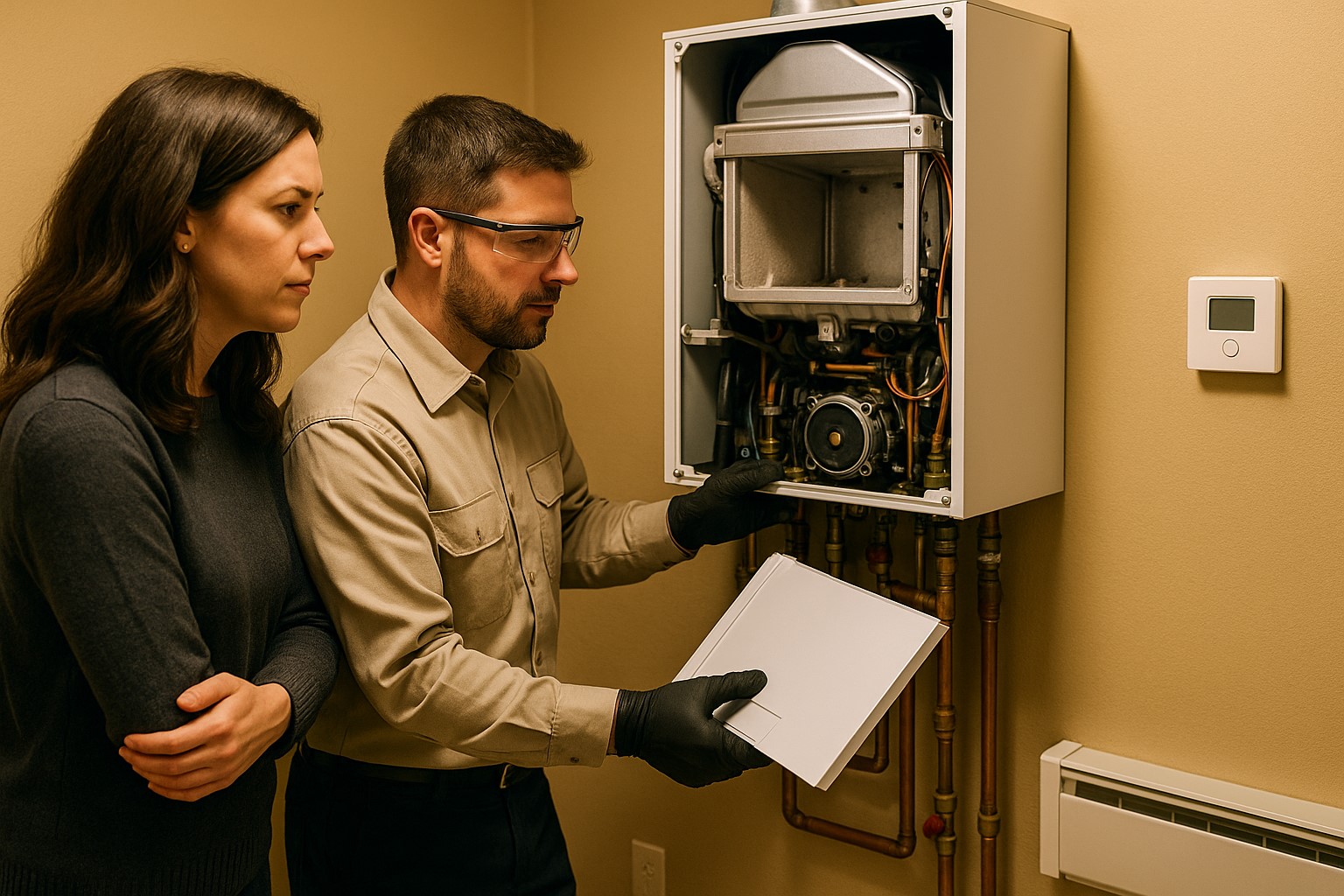
During a service visit, we begin with safety and performance checks—including a visual inspection, venting review, and startup evaluation—then proceed to diagnostics to measure pressures and temperatures, verify flame and ignition, check pumps and controls, and identify leaks or failing parts. If maintenance is needed, we clean burners and heat‑exchange surfaces, flush air from loops, clear condensate lines, and lubricate moving parts where applicable. We then explain findings in plain language, outline options, and prioritize safety and reliability first. Finally, we perform post‑repair checks to confirm stable operation and consistent heat delivery.
How Regular Maintenance Prevents Expensive Repairs
A seasonal boiler tune‑up helps catch worn parts, clean critical components, and optimize operation before the first big cold snap. Proactive care reduces mid‑winter surprises, improves efficiency, and extends equipment life—delivering smoother comfort and fewer repair bills across the season.
What a professional tune‑up often includes
A professional tune‑up often includes combustion and safety control testing, venting/flue inspection and draft verification, leak checks at fittings, valves, and heat‑exchange surfaces, expansion tank, pressure relief, and circulator evaluations, system flush or descaling recommendations when buildup is present, and thermostat and control calibration for accurate temperature response.
FAQs About Boiler Repair in Beaumont, TX
How much does boiler repair cost in Beaumont?
Costs vary depending on the issue, but most common repairs range from minor fixes to more involved component replacements. Request an inspection for an accurate quote.
Should I repair or replace my boiler?
If your boiler is under 15 years old and the issue is minor, repair is often the best choice. Older systems with frequent issues may be better off replaced.
How often should I service my boiler?
At least once per year, ideally before the heating season. Regular servicing extends lifespan and maintains efficiency.
Why Homeowners Choose Air Services Unlimited
Homeowners choose Air Services Unlimited because, since 1981, we’ve been trusted locally across the Golden Triangle and surrounding areas. Our NATE‑certified technicians bring up‑to‑date training and proven craftsmanship to every call, and our 24/7 emergency services mean you get support when you need it most. We provide detail‑driven diagnostics that prioritize safety, reliability, and long‑term performance—not quick fixes. You can also count on clear communication—straightforward findings, options, and next steps with no jargon or surprises—and genuine respect for your home, including shoe covers, tidy work areas, and clean finishes when the job is done.
Don’t Wait Until It’s Too Late
Keep your home safe, efficient, and comfortable all winter. Schedule boiler repair with Air Services Unlimited today and get expert help from a team dedicated to exceeding expectations—so you can Enjoy the Great INDOORS.
Don’t let a small boiler issue turn into a big winter emergency — schedule your service with Air Services Unlimited today.